- Domain Names
- Domain Types
- Generic Country Code Top Level Domains
ccTLDs that Google treats as generic top-level domains
Every country or territory gets its own two-letter domain extension. In theory, a country code top-level domain (ccTLD) is tied to a specific country: .fr belongs to France and .jp to Japan. In practice, Google has decided to treat 20 of these country domains, including .io, .ai, and .tv, as generic, with no geographic signal attached to them.

TLD-list
Editor team
List of ccTLDs treated as generic TLDs in Google Search
These are the extensions Google considers gccTLDs. Each one is still run by its own registry, and only Google's treatment changes. This list of ccTLDs can change, and Google may add or remove a TLD over time.
| Extension | ccTLD's Country |
|---|---|
| .ad | Andorra |
| .ai | Anguilla |
| .as | American Samoa |
| .bz | Belize |
| .cc | Cocos (Keeling) Islands |
| .cd | Democratic Republic of the Congo |
| .co | Colombia |
| .dj | Djibouti |
| .fm | Federated States of Micronesia |
| .io | British Indian Ocean Territory |
| .la | Laos |
| .me | Montenegro |
| .ms | Montserrat |
| .nu | Niue |
| .sc | Seychelles |
| .sr | Suriname |
| .su | Soviet Union (legacy) |
| .tk | Tokelau |
| .tv | Tuvalu |
| .ws | Samoa |
Frequently asked questions around generic ccTLDs
A generic top-level domain (gTLD), such as .com or .app, is open to anyone worldwide. Country code top-level domains (ccTLDs), by contrast, are two-letter extensions assigned to individual countries and territories.
However, Google observed that many unrestricted country-code domains, such as .io, .tv, .me, and .fm, had long since outgrown their geographic origins. Businesses around the world were registering them for their branding value rather than to target the British Indian Ocean Territory, Tuvalu, Montenegro, or Micronesia. AI companies choose .ai because it stands for artificial intelligence, not because they serve Anguilla. As these usage patterns became widespread, Google began treating these ccTLDs as generic domains, reflecting how people actually use them rather than their formal country assignment. The list has evolved over time; for example, .ai was only added in 2023 after Google concluded that the extension had become overwhelmingly associated with AI rather than Anguilla.
For SEO, Google's decision to treat these ccTLDs as generic means a domain on the list can rank anywhere in the context of the ccTLD vs gTLD debate. Google treats it as more generic than country-targeted, so a site on .io or .ai can rank outside of the one country its extension formally belongs to. That is why global startups, including many AI companies, feel comfortable building on these ccTLD domains.
In the past, Google Search Console offered an International Targeting report where webmasters could point a generic domain at a certain country. Google retired it, so you can no longer set geotargeting by hand at the domain or country level. Google uses on-page signals instead: content written in the local language, and hreflang annotations that tell Google which URL serves which country or region. Keep in mind that these annotations give no ranking boost, as a ccTLD gets in its intended country. They only help Google show the right version in search results to users in different countries.
Google has stated on multiple occasions that country code top-level domains (ccTLDs) can receive a small localization boost for users searching from their corresponding country. In 2023, Google Search analyst Gary Illyes explained that Google’s localization system (“language demotion, country promotion”) gives domains such as .de a slight advantage for searches performed in Germany. A year later, Google Search Relations’ Martin Splitt reiterated that choosing a country’s ccTLD “might also get a tiny boost” for users searching from that country.
You can still localize a site on one of these ccTLD and aim it at specific countries. If your .ai domain should reach customers in Mexico, publish content for that market in Spanish, earn local links, and declare alternate language versions across multiple markets rather than forcing a redirect by location. Google might take time to learn the association with your target country, since generic TLDs carry no default signal.
If your project is limited to specific markets and country targeting matters more than branding, country-specific domains such as .fr, .de, or co.uk remain the stronger signal, typically one ccTLD per market. For everyone else, generic domains like .io, .ai, .co, and .me deliver the flexibility of a gTLD with a sharper name. That is exactly why certain country code top level domains ended up treated as generic in the first place: enough site owners were already using them that way.
About the Author:
TLD-list
Editor team
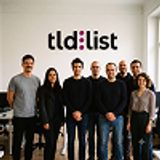
Small crew of builders who believe a great idea should not be held back by a bad domain deal. We know this space inside out, from obscure new extensions to the registrar tricks that quietly inflate your renewal. We put that knowledge to work so you can spend less time worrying about domains and more time building the thing that matters.
Related Posts
Choosing the right domain name with all the information
How to pick a name, choose an ending, and check availability without overpaying. Covers naming tips, all five TLD types, domain levels and ccSLDs, what each extension signals, and why renewal price beats the intro rate.
Read Full ArticleHow to get a free domain name
Not all free domain offers are created equal. This guide explains how to get a free domain through hosting, website builders, and other methods, what you’ll pay after the first year, and how to compare renewal costs before committing.
Read Full ArticleList of country code top-level domains (ccTLD) with every single country domain available
Interactive list to find the country code domain you are looking for.
Read Full ArticleWhat is a parked domain?
A parked domain is a registered domain that isn’t connected to a live website, instead displaying a placeholder, ads, or a for-sale page. Learn how domain parking works, why owners park domains, common use cases, monetization options, costs, and how to unpark a domain when you’re ready.
Read Full Article